The faint scan.
Can the field be read? If it cannot, is that uncertainty clear to the reviewer?
From carbon-copy claim forms to handwritten appeals, classify the document, extract the relevant fields and check them against your rules. Staff can compare unclear or important values with the original page.
A narrated illustrative healthcare intake workflow showing document extraction, exception review and handoff, with clinical decisions kept with the care team.
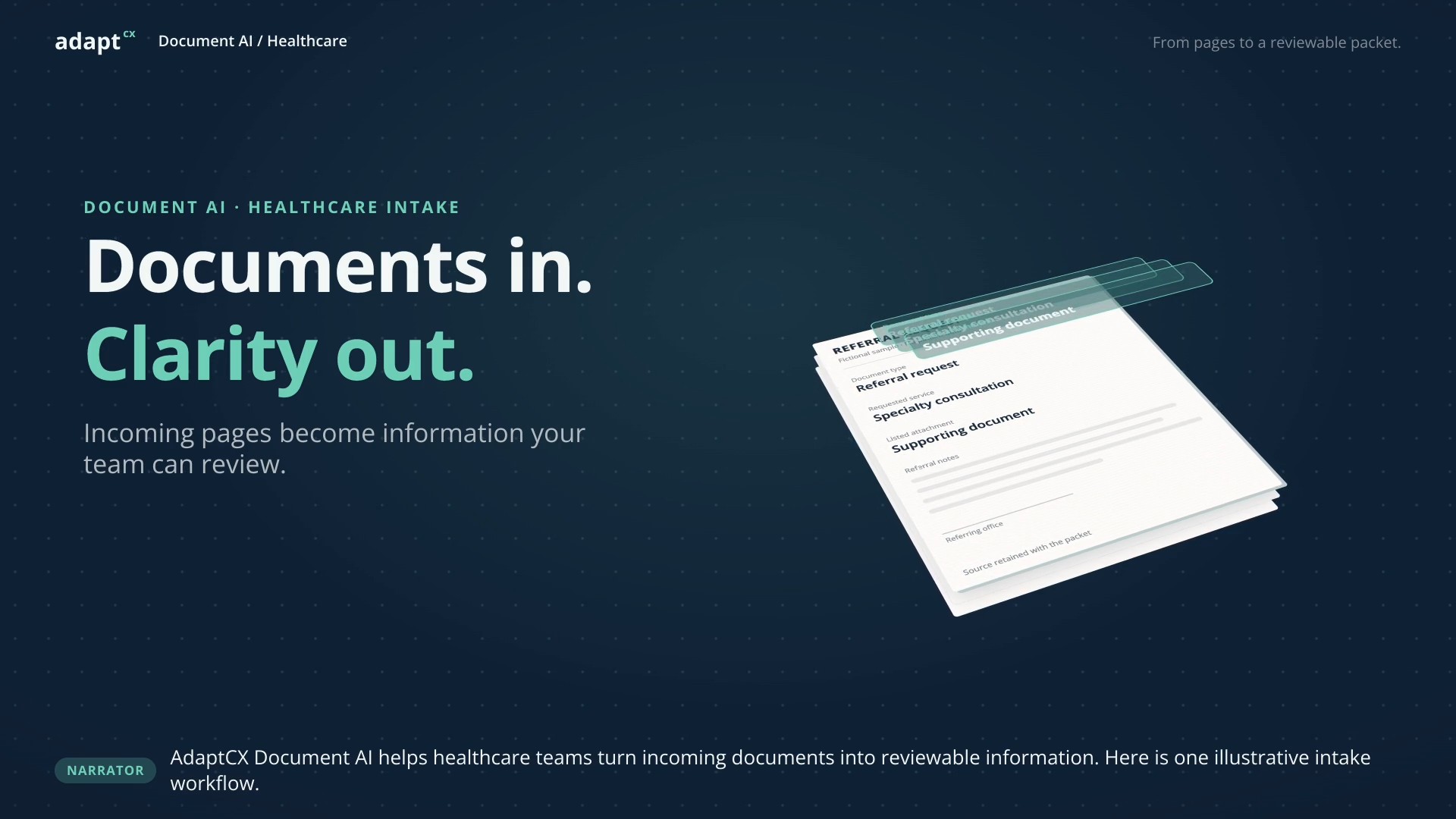 From pages to a reviewable packet.1:07 · Watch video
Watch video · 1:07
Narrator: AdaptCX Document AI helps healthcare teams turn incoming documents into reviewable information. Here is one illustrative intake workflow. Nina: A new referral packet. Let me check what is here. Narrator: The original document stays beside its extracted details. Nina checks the document type and requested service. Nina: The form lists an attachment, but that document is missing from this packet. Narrator: Nina marks the missing item for follow-up. Human review determines what happens next. Sam: Here is the missing attachment. Please add it to the packet. Nina: I have added it and checked the details against the originals. The intake review is complete. Narrator: The reviewed details and source documents are ready for the next step. Clinical decisions stay with the care team. Narrator: Receive documents. Extract details. Review exceptions. Prepare the handoff. AdaptCX Document AI for healthcare.
ONE DOCUMENT. FOLLOW IT THROUGH.
A sample appeal form, brought to life.
Illustrative workflow, not a product recording.
Use the reference on your notice. Tell us why you are requesting a review.
The original stays in view.
The document is ready.
Play to follow the fields.
In this example, the reviewer confirms June 8.
Reviewed fields + original document
Example only. No record is sent.A value without context is only half the answer.
A sample form arrives. The next steps follow its reference number and one handwritten date.
Illustrative data and reviewer actions. This animation explains a proposed workflow; it does not establish accuracy, supported formats or a working integration.
THE PART WORTH TESTING
The real test is the paperwork your team has to fix by hand.
Can the field be read? If it cannot, is that uncertainty clear to the reviewer?
Can a person compare the extracted value with the source before accepting it?
What fields, source documents and review information does the receiving process actually need?
START WITH YOUR PROCESS
Your document types, review rules and destination shape the evaluation. We’ll scope that work with you before promising a connection.
Fields · source · review context
Destination, mapping and acceptance criteria.
BEFORE THE DEMO
That needs to be established with representative samples. Include poor scans, handwriting and exceptions, then compare the results with values your team has verified. Agree the acceptance criteria before expanding the scope.
We have not established support for your system from this page. A connection needs technical review of the destination, available interfaces, field mapping and document handling before it can be committed to.
The document types and volumes you handle, where staff spend time correcting them, what needs human approval, and where the reviewed information goes next. Arrange a secure exchange before sharing sensitive files.